
Led by Dr. Kimberly Ernest, Ph.D., LPC, PCTI offers specialized training designed to help professionals approach problematic sexual behavior with greater clinical confidence, developmental understanding, and practical skills.
Trainings are available live via Zoom or in person in Lebanon, Pennsylvania. On-site training may also be arranged for organizations, with travel and related expenses covered by the requesting organization.
Whether you are an individual clinician looking to develop specialized competency or an organization seeking training for an entire team, we can help identify the training option that best fits your needs.
Complete our Training Interest Form and we will connect with you to discuss your setting, goals, preferred format, and budget.
Trainers:
Dr. Kimberly Ernest, Ph.D., LPC
Carrie Meehan, MA, LPC
Susan Wright, MPA
Our five-day JPSB training provides clinicians with a comprehensive foundation for assessing and treating adolescents who have engaged in problematic, harmful, or illegal sexual behavior.
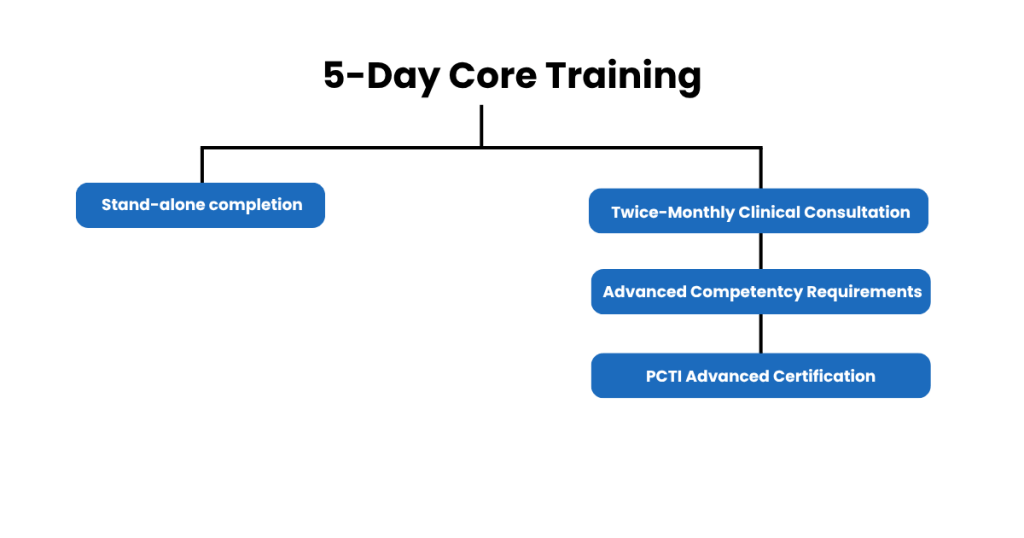
Clinicians may complete the five-day training as a stand-alone intensive educational experience. This option is ideal for professionals who want specialized knowledge and practical clinical skills without pursuing advanced certification.
Clinicians who want to continue developing advanced competency may elect to participate in our certification pathway following the five-day core training. The advanced pathway adds twice-monthly clinical consultation, allowing participants to apply the material to real clinical work, receive ongoing case consultation, strengthen their conceptualization and intervention skills, and demonstrate advanced competency over time.
Participants do not need to commit to the advanced pathway simply to attend the five-day training.
The purpose of the Day 1 sessions is to increase participants’ awareness and understanding of problematic sexual behavior in juveniles.
| Time | Session and Description |
|---|---|
| 09:00 - 10:00 | Introduction Warm-up: Stereotypes of Juveniles / Overview of the purpose of problematic sexual behavior |
| 10:00 - 10:20 | Statistics and history of problematic sexual behavior |
| 10:20 - 11:10 | Dynamics and causes of problematic sexual behavior |
| 11:10 - 11:20 | BREAK |
| 11:20 - 12:15 | Discussion on typologies of juveniles |
| 12:15 - 12:45 | LUNCH |
| 12:45 - 02:15 | Technology and concerning behavior |
| 02:15 - 04:00 | Positive Practice – Discussing High Risk Technology Behaviors with Adolescents and families |
The purpose of Day 2 is to develop understanding surrounding denial in individuals engaged in problematic sexual behavior. Family resistance to treatment and intervention is also common, and its causes and background will be discussed. Participants will learn the elements of intake and assessment surrounding the juvenile and their family, including various assessment tools and techniques.
| Time | Session and Description |
|---|---|
| 09:00 - 10:00 | What is denial and how does it appear in referral, intake, treatment? |
| 10:00 - 11:00 | Resistance in families – why is this natural? |
| 11:00 – 11:15 | BREAK |
| 11:15 – 12:15 | Assessment issues and techniques |
| 12:15 – 12:45 | LUNCH |
| 12:45 – 02:00 | Continue Assessment issues and techniques |
| 02:00 – 04:00 | Positive Practice – Assessments and Rolling with Resistance |
The purpose of the Day 3 sessions is to develop and increase participants’ awareness and understanding of the components of treatment planning and phases of treatment.
| Time | Session and Description |
|---|---|
| 09:00 - 10:00 | Identifying treatment goals / Inviting collaboration in treatment planning |
| 10:00 - 11:10 | Phases of treatment |
| 11:10 – 11:20 | BREAK |
| 11:20 - 01:00 | Educating clients and families on stages of treatment; overview of what may happen when challenges arise |
| 01:00 - 01:30 | LUNCH |
| 01:30 - 02:00 | Family Culture |
| 02:00 – 04:00 | Trauma Informed Care |
The purpose of the Day 4 sessions is to increase participants’ ability to utilize a variety of interventions when working with juveniles with problematic sexual behavior and their support systems.
| Time | Session and Description |
|---|---|
| 09:00 - 10:00 | Curriculum use / Elements of curriculum implementation |
| 10:00 - 11:10 | Cycle of violence; offense cycle; trauma reactive behavior |
| 11:10 – 11:20 | BREAK |
| 11:20 - 12:15 | Healthy sexual education for adolescents and their family |
| 12:15 - 12:45 | LUNCH |
| 12:45 - 01:30 | Elements of individual, group, and family treatment |
| 01:30 - 02:00 | Boundaries and Vicarious Stress of the Helper |
| 02:00 - 04:00 | Positive Practice – Group Processes |
The purpose of the Day 5 sessions is to increase participants’ ability to work collaboratively with clients and their families to plan for success in the future. This may include reunification or transition into other forms of treatment. Participants will also discuss elements of ongoing professional development and appropriate self-care.
| Time | Session and Description |
|---|---|
| 09:00 - 10:00 | Ongoing family engagement / Family reunification |
| 10:00 - 10:20 | Safety planning |
| 11:10 – 11:20 | BREAK |
| 10:20 - 11:10 | Accountability partners |
| 11:20 - 12:30 | Staff development; ongoing resources |
| 12:30 - 01:00 | Lunch |
| 01:00 - 01:40 | Positive Practice: Accountability Sessions |
| 01:45 - 04:00 | Systemic Family Factors and Maintaining Safety within the home |
Problematic sexual behavior in younger children requires a very different clinical lens than problematic sexual behavior in adolescence.
This two-day training is designed primarily for professionals working with children under age 12 who demonstrate reactive, concerning, or problematic sexual behaviors, particularly when these behaviors occur in the context of trauma, exposure, disrupted attachment, family stress, or other adverse experiences.
The training helps clinicians move beyond simply asking “How do we stop the behavior?” and toward understanding what the behavior may be communicating, what maintains it, and what the child and family need in order to establish safety and healing.
This training is appropriate for clinicians and organizations serving younger children in outpatient, community-based, child welfare, school-based, residential, and other behavioral health settings.
Working with problematic sexual behavior creates clinical situations in which ethical decision-making can become unusually complex.
Clinicians must balance client welfare, confidentiality, caregiver involvement, mandated reporting, documentation, safety concerns, professional competence, stigma, legal involvement, and the needs of multiple people who may be affected by the behavior.
This 3.5-hour training examines the ethical challenges that arise when working with children and adolescents with problematic sexual behavior and provides clinicians with a structured way to think through difficult decisions.
This training is particularly well suited for clinical teams, supervisors, agencies, and professionals seeking ethics-focused continuing education relevant to complex behavioral health practice.
Not every organization needs the same training.
You may have a particular population, clinical challenge, program model, amount of available training time, or budget that does not fit neatly into one of our standard offerings. We are happy to talk with you about it.
PCTI can work with organizations to explore customized training options based on your setting, audience, goals, available time, and budget.
You do not need to know exactly what training you need before reaching out. Tell us about your setting, the professionals you hope to train, the challenges you are encountering, and what you hope your team will be able to do differently after the training. We can help determine what format makes the most sense.

Dr. Kimberly Ernest is a licensed psychologist and Licensed Professional Counselor with extensive experience in community behavioral health, clinical leadership, supervision, and the assessment and treatment of children, adolescents, adults, and families.
Her clinical and training work has included a particular focus on complex and highly stigmatized behavioral health presentations, including problematic sexual behavior, trauma, substance use, and justice-involved populations, utilizing evidence-based practices and systemic approaches.
Her approach emphasizes creating safety through developmentally appropriate treatment, systemic case conceptualization, meaningful caregiver involvement, clinical accountability, and helping providers remain thoughtful and effective when working with behaviors that can evoke fear, judgment, or uncertainty.
Dr. Kimberly Ernest is a licensed psychologist and Licensed Professional Counselor with extensive experience in community behavioral health, clinical leadership, supervision, and the assessment and treatment of children, adolescents, adults, and families.
Her clinical and training work has included a particular focus on complex and highly stigmatized behavioral health presentations, including problematic sexual behavior, trauma, substance use, and justice-involved populations, utilizing evidence-based practices and systemic approaches.
Her approach emphasizes creating safety through developmentally appropriate treatment, systemic case conceptualization, meaningful caregiver involvement, clinical accountability, and helping providers remain thoughtful and effective when working with behaviors that can evoke fear, judgment, or uncertainty.
Dr. Kimberly Ernest is a licensed psychologist and Licensed Professional Counselor with extensive experience in community behavioral health, clinical leadership, supervision, and the assessment and treatment of children, adolescents, adults, and families.
Her clinical and training work has included a particular focus on complex and highly stigmatized behavioral health presentations, including problematic sexual behavior, trauma, substance use, and justice-involved populations, utilizing evidence-based practices and systemic approaches.
Her approach emphasizes creating safety through developmentally appropriate treatment, systemic case conceptualization, meaningful caregiver involvement, clinical accountability, and helping providers remain thoughtful and effective when working with behaviors that can evoke fear, judgment, or uncertainty.
You may already know exactly which training you want. You may simply know that your clinicians are encountering these cases and need more support. Either is a good reason to reach out.
We use cookies and similar technologies to enhance your browsing experience, remember your preferences, analyze site traffic, and support website functionality. By clicking “Accept All Cookies,” you agree to our use of cookies as described in our Privacy Policy. You may manage your cookie preferences or decline non-essential cookies at any time.